
Professor Chau-Jin Hu’s Personal Exhibition of “Dancing Butterflies Falling in Love with Flowers” Depicts the Beauty of Ginger Lilies
Text/Photo: Chia-Yi Lee
Translation: Steve J. Lin
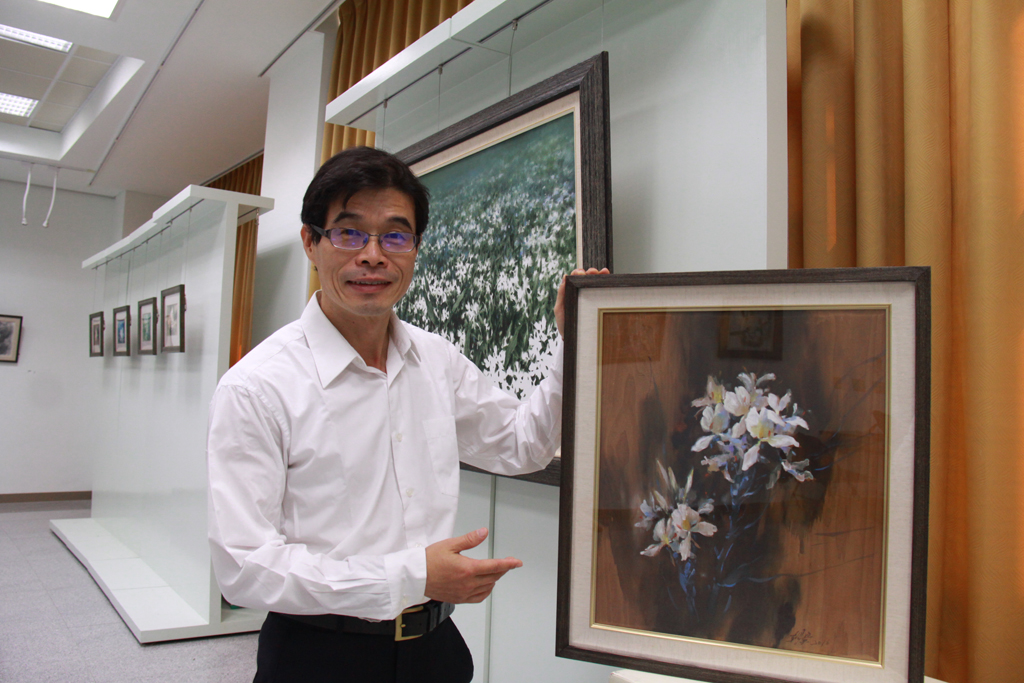
慈濟大學通識教育中心胡朝景老師舉辦《舞蝶戀花》個展,28幅畫全部以野薑花為主,利用不同的媒材包括油畫,水彩,鉛筆,炭筆,粉彩等,將野薑花姿態和意象之美呈現給大家,走進以畫圍成的野薑花海中彷彿能聞到野薑花清新的味道撲鼻而來,極具有療癒效果。
Professor Chau-Jin Hu, a faculty member of TCU’s Center for General Education, held a personal exhibition with the theme of “Dancing Butterflies Falling in Love with Flowers.” He used oil, watercolors, pencil, charcoal and crayons to 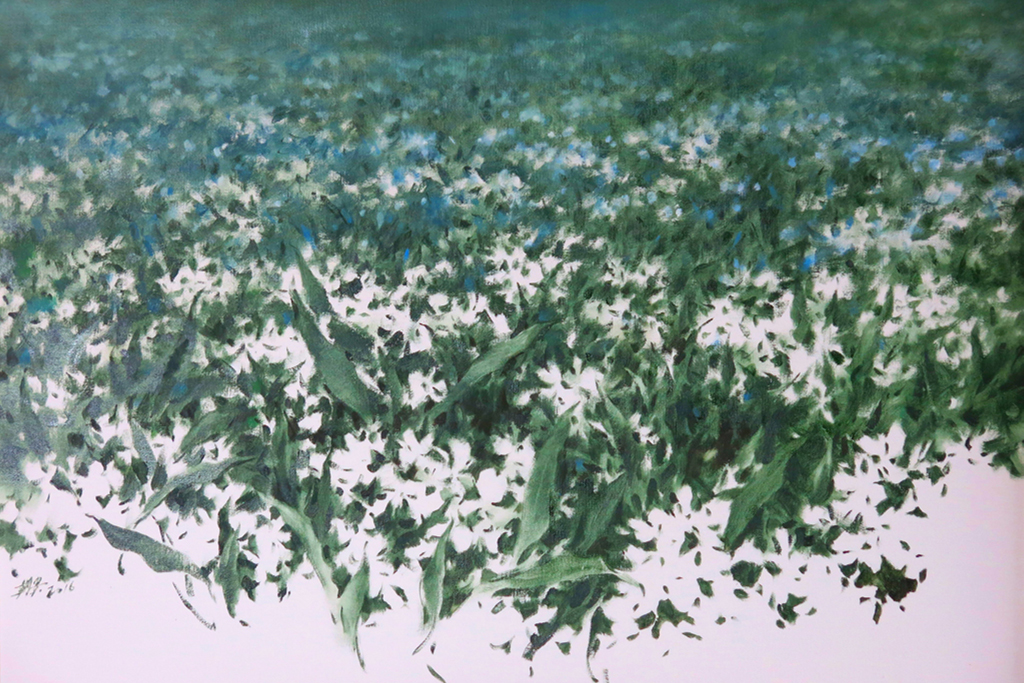 portray the beauty of ginger lilies. Visitors might smell ginger lily’s fresh fragrance, which is good for body and mind.
「我太太很喜歡野薑花。」第一幅野薑花作品創作於2013年,胡朝景表示,因為太太喜愛野薑花,花蓮很多超市櫃檯結帳處都有賣一束束的野薑花,常常會順手買回家,就成為他畫畫的靈感了。野薑花的香味清新 ,顏色潔白,花形本身就像蝴蝶一樣,在畫野薑花的過程中,對胡朝景老師來說是一種享受。他覺得畫野薑花是純粹因為想畫而畫。有畫畫的衝動沒有升等的壓力,非常隨興、輕鬆、快樂。畫畫的心情流瀉渲灑在作品中,各種姿態的野薑花就像翩翩飛舞的白蝴蝶,給人自由溫暖的感覺。
Professor Hu painted ginger lilies the first time in 2013. “My wife loves ginger lily very much,” he said. Since many Hualien supermarkets display ginger lilies on their checkout counters, Mrs. Hu buys ginger lilies at the supermarket very often, and these flowers inspired professor Hu to paint their beauty. Ginger lilies have a fresh fragrance and white color and look like butterflies. Thus, Professor Hu enjoys portraying them. He does it with a free spirit, at ease and joyfully, and his paintings reflect his mindset.
最特別的是這28幅畫中,除了傳統基底材水彩畫紙,油畫紙,素描紙外,還加了牛皮紙,瓦楞紙和木片等。胡朝景老師解釋,木片其實是來自他屏東老家,在超過百年以上的三合院,因為沒人住而拆除,胡朝景老師從老家搶回了舊碗櫥,將木板拆下來保留,原本只是當成調色盤,但在調色過程中感受到顏料在木板形成另一股古樸的氛圍,因此,嚐試在木板上畫出野薑花。五歲以前胡朝景和爺爺奶奶一起住在屏東鄉下,在鄉下隨處都可以看到野薑花,隨手都可以摘到,而這些老家的記憶,雖然已經逝去,但透過胡朝景老師的創作,將老家的回憶保留在畫作裡。
The exhibition has 28 paintings. In addition to using traditional paper, such as watercolor paper, paper for oil painting, and paper for pencil or charcoal drawing, Professor Hu utilized kraft paper, corrugated paper and wood for his paintings. Growing up in Pingtung, he used to live in a traditional courtyard house more than a hundred years old, which was torn down later. Yet, he has kept a cupboard from the old house, and uses a wooden part taken from the cupboard as his palette. Putting pigment on the wood gives him a feeling of old-fashioned attractiveness, and thus he has attempted to paint ginger lilies on wood. Before age 5, he lived with his grandparents in the countryside, and ginger lilies were everywhere, but not anymore. Professor Hu has tried to keep his childhood memories in his paintings.
最大幅的畫作是寬106公分,長76.5公分的野薑花海,白色的野薑花海讓人彷彿置身於另一個空間,胡朝景老師表示,構思這幅畫的時間比較久,但真正畫起來很快,原本還想要上色,但有一天回到家看到這幅未完成的畫,居然有一種引人自由想像的空間,就決定停筆了。胡朝景老師進一步解釋,畫也有節奏感,遠近,大小,筆觸輕重,顏色濃淡,厚薄,就像音樂強弱的節奏旋律一樣,在畫這些野薑花時筆隨心走,形成的旋律和節奏,想像的空間就留給看畫的觀眾。
The most sizable painting was 106 x 76.5 centimeters large. He took a long time to decide what to paint, and once he decided, he started quickly. One day, looking at this incomplete work, he chose to leave it as it was. Professor Hu said that music has rhythm and pitch, and a painting also contains these elements. Far and near distances, large and small objects, light and heavy strokes, as well as light and dark colors are the rhythm of a painting. He followed his heart while painting ginger lilies, so rhythm and pitch are reflected naturally, and visitors will feel them while looking at the paintings.
胡朝景老師《舞蝶戀花》個展自12月05日~12月30日(週一至週五早上八點到下午五點)在慈濟大學大愛藝文中心展出,歡迎大家一起來一趟心靈藝術饗宴。
Professor Hu’s personal exhibition was on display from December 5 to December 30, Monday through Friday, from 8:00 am to 5:00 pm. The venue was the Da-Ai Art Center, on the Main Campus.