A Brief Comparison of Cultural Differences 理科大交流 年輕人一起關心環境議題
Text: Lee Chia-Yi
Photo by Chang Tsan-Yu
Translated by Fang Kai-Ping
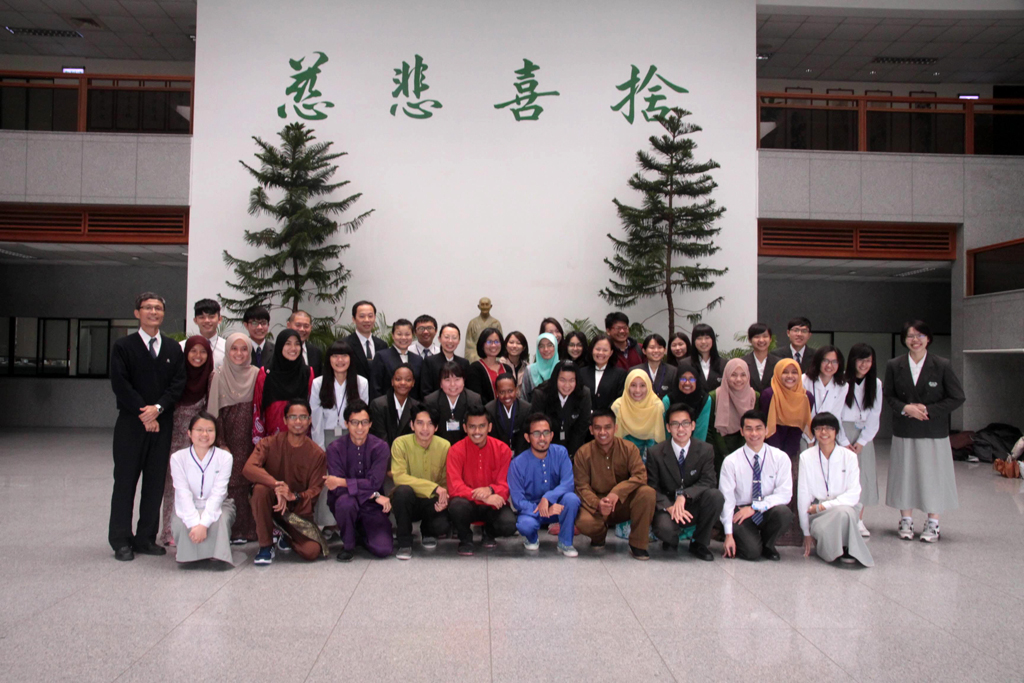
The brief exchange program between Tzu Chi University (TCU) and University of Science, Malaysia (USM) from Jan 13th to 22nd included events like recycling, teaism, flower arrangement, calligraphy, lion dance, aboriginal dance, and diabolos. The students of USM were intrigued by how Taiwan stresses environmental conservation through recycling and garbage classification, for it is an issue that all youths around the globe should face.
慈濟大學與馬來西亞理科大學自1/13日到22日進行短期的交流活動包括有到環保站做回收、茶道、花道、書法,以及舞獅、原住民舞、玩扯鈴等。理科大同學對於台灣重視環保,垃圾必須分類覺得是一件很棒的事情,他們認為全球的年輕人都應該正視環境問題。
After a week of cultural experience in Taiwan, students from TCU and USM were divided into 13 groups to discuss the similarities and dissimilarities between the two cultures. The scope of comparison ranged from birth, marriage, to death. In Taiwan, there are many do’s and don’ts from pregnancy and birth. For example, pregnant women must not hold scissors, one must keep quiet about the pregnancy for the first trimester (3 months), the hair from a baby’s first haircut are used to make ink brushes, and then there are drooling ceremony, full month gifts, and drawling lots on baby’s first birthday.
“So, in drawling lots, when you grab a police car, it means you will become a police; what does it mean if you grab green onions?” One of the USM students asked, genuinely puzzled. Some guessed farmers for obvious reasons, but the answer was not an occupation. Unlike police car, which resembles a profession, grabbing green onion, a vegetable with its name homonymic to “intelligence”, is an attribute rather than a profession.
In Malaysia, particularly in Islamic tradition, according to the students, a new born child is bathed and prayed for by the entire family; a boy is circumcised before the age of 12.
經過一個星期的台灣文化體驗,慈大和理科大學生分成13組,報告台灣文化和馬來西亞有什麼差異和相似呢?從出生,結婚到死亡,兩國文化比一比,台灣從懷孕開始就有很多習俗,包括孕婦不能拿剪刀,前三個月不可以跟別人講,嬰兒出生的頭髮可以當作胎毛筆,還有收涎,滿月飯甚至滿周歲時還有抓周活動,預測未來的職業。理科大同學對於台灣這些習俗感到非常好奇,抓到警車代表以後要當警察,那如果抓到蔥,代表甚麼意思,大家以為是要當農夫,沒想到是代表很”聰明”。而馬來西亞伊斯蘭教孩子出生時家人團聚為他沐浴和祈禱,男孩在12歲以前舉行割禮。
When it comes to naming, the two cultures are distinctively different, but the respect for family is shared. In Taiwan, the family name is placed as the first character o, or two characters in the case of compounded family name. In Malaysia, under Islamic tradition, the name of the father replaces the family name. For example, in the name “Nor Sahira bt Mohd Salim”, Nor Sahira is the actual name of the person, bt means the daughter of, and Mohd Salim is the father’s name.
When it comes to family reunion, Taiwan has autumn festival and lunar new year. During lunar new year, family members from near and far must spare a day or two, gather on lunar new year’s eve, and dine together on dishes which holds auspicious meanings. In Malaysia, they also hold their family gathering on new year. As the lunar new year approaches, the USM students seize the opportunity to write some auspicious couplets and have a taste of Taiwan’s celebratory vibe.
華人的名字,第一字是家族的姓,有單姓例如李、王,也有複姓例如歐陽等。但是伊斯蘭教的名字,卻冠上父親的名字,「NOR SAHIRA BT MOHD SALIM」本名是NOR SAHIRA,BT是誰的女兒,MOHD SALIM就是指父親的名字。而不論是哪一個國家,大家對家族的重視都是一樣的,例如台灣的中秋節和農曆新年是家人團聚的日子,尤其是春節,每道菜都有特別的意思,例如餃子代表元寶等。伊斯蘭教的新年,也是全家團圓的日子。而他們也利用這次機會寫春聯,感受台灣過年的喜氣。