TCU’s Faculty Members Guide High School Students to Appreciate Science
Text: Chia-Yi Lee
Photo: Chia-Yi Lee and Tzu Chi High School
Translation: J.B. Willis, Steve J. Lin
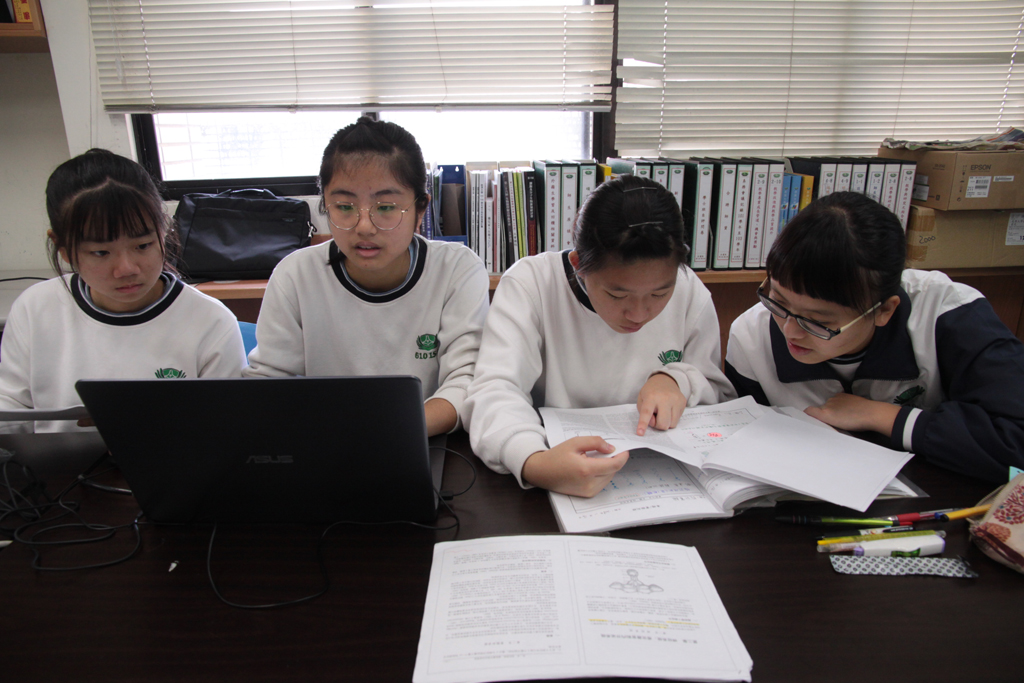
“There are many different types and species of termites active in Taiwan, and each has developed a complex system of colony defense that includes the nest, workers and soldiers. Moreover, I have just found out that soldier termites don’t have any wings…” Four high school sophomores from Tzu Chi High School searched relevant scientific literature in the discussion room of TCU’s Department of Molecular Biology and Human Genetics, trying to learn more about termites. These students came to TCU every Friday to carry out their science projects, and followed professors’ guidance to keep their projects going. They have learned through open discussions with college professors and operating lab facilities, which are not available in their school.
Tzu Chi High School freshmen in the Nature of Science class are required to take “Thoughts on Science” in the fall semester, at their school. This class is taught by Professor Susan Yeh and other faculty members of the Department of Life Sciences and the Department of Molecular Biology and Human Genetics. In the spring semester, students can choose to do science projects at their school, Tzu Chi University or Hualien Tzu Chi General Hospital, and most of them decided on Tzu Chi University. Guan-Yun Chen, Zhi-Qing Li, Min-Yi Zhuang and Jin-Yun Zhang chose to study termites with Professor Ming-Der Lin, and they were asked to breed prorhinotermes flavus, a kind of termite. These students were afraid of termites at first, because termites always come out right before it rains, which bothered them. After spending a semester with termites, the students had a quite different point of view. They discovered that termites consist of various species, and not all of them eat wood. Termites consume dead plants at any level of decomposition. They also play a vital role in the ecosystem by recycling waste material such as dead wood and plants. The students spent some of their time in the lab, and sometimes in discussions with each other or their professors. Min-Yi was very happy to gain her skills and knowledge this way. She learned how to organize her research data and look for relevant literature, and thus she acquired a lot of vital information. None of these experiences could be gained from her textbooks.
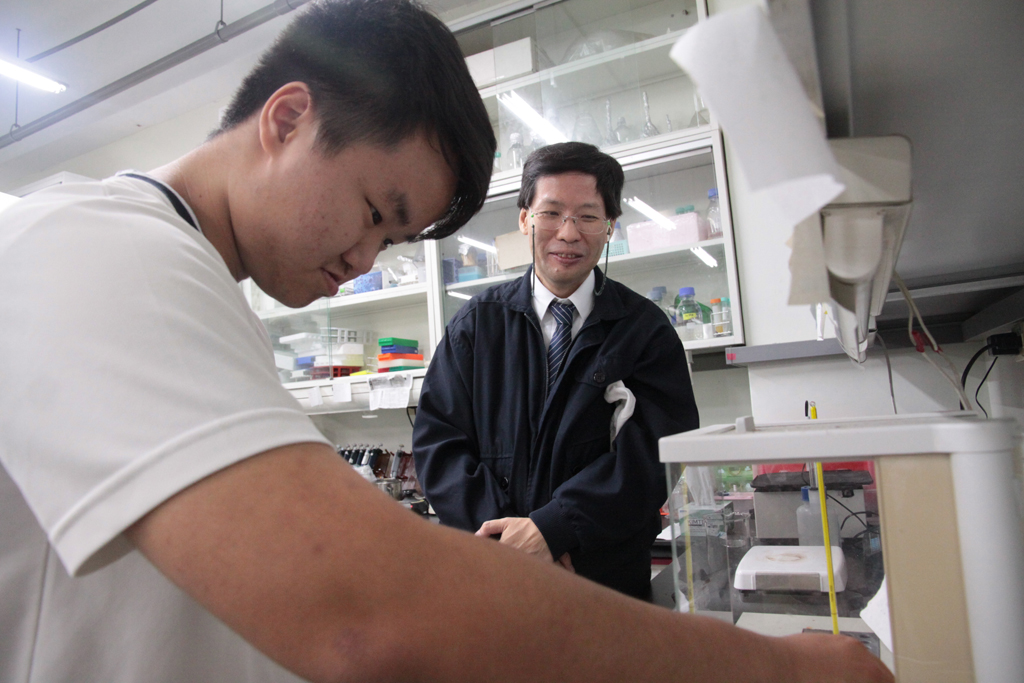
Two groups of high school students worked on their projects with Professor Hsin-Hou Chang. One group tried to find ways to speed up plant growth, and another looked for bacteria that are capable of breaking down plastic. One student, Quan-Jia, said “I’m aware that many high school students my age have started to look for solutions to the needs of our daily lives.” Used plastic will last for a long time, and so we have to do something about it. Quan-Jia and his team members are devoted to finding the right bacteria, by bringing back bacteria from TCU’s recycling station, ecological pool and soil near the sewage treatment plant, for cultivating the bacteria, and follow the guidance of TCU’s faculty members to carry out their studies to find several kinds of radiobacteria and study the possibility of their decomposing plastics..
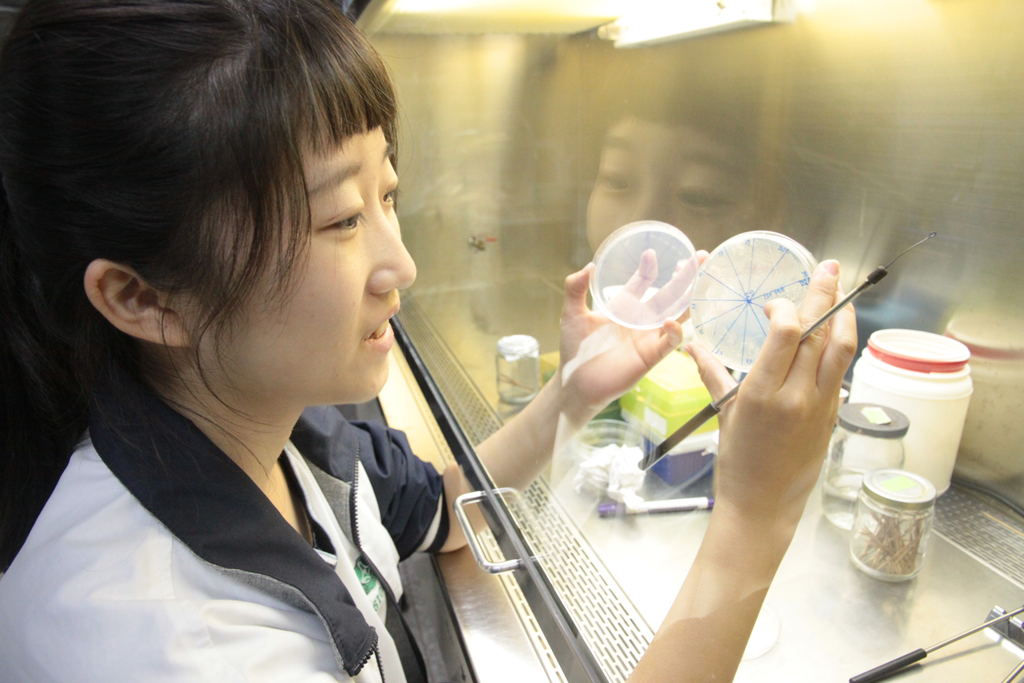
Xi-Jun Wu and two of her peers worked in Professor Chun-Yao Chen’s lab. Through microscopes, they worked on the cultivation and observation of azotobacter, a genus of bacteria which is helpful to enrich soil. Professor Chen loved asking his students questions, and often had discussions with them. Xi-Jun never had this experience in her high school class. She learned the fundamentals of conducting research, experienced operating a laminar airflow bench and cultivating azotobacter firsthand, which brought her great joy.
This program is a joint effort of Tzu Chi University and Tzu Chi High School, has been held for more than three years, and was initiated by Professor Hsin-Hou Chang in 2015. In the first year of the program,TCU’s faculty members spent their weekends with these students. The students acquired comprehensive skills and knowledge on TCU’s campus, enjoyed open discussions with TCU’s faculty members, and gained firsthand experience in carrying out lab research. They learned with joy and appreciated science from experiencing it firsthand.
Tzu Chi High School students learn in a quite different way at TCU. At their own school, they may get high grades by only using their memory. However, while carrying out their science projects at TCU, they are asked to respond to many questions and participate in various discussions, in order to enhance their abilities in identifying their problems and looking for possible solutions. As a result, these students, empowered by scientific thinking, will ask questions in their high school classes, and are more capable of expressing their ideas and laying out their rationales.