TCU’s Chinese Language Center Students Serve Youngsters Living on the East Coast
Text/photo:Chinese Language Center
TCU’s Chinese Language Center worked with Sowers Culture and Arts Foundation, inviting TCU’s international students studying at the Chinese Language Center to serve youngsters at Shui-Lien Village. The international students tried to communicate with the youngsters in Chinese, and the youths were happy to interact with them; as a result, they expanded their global views.
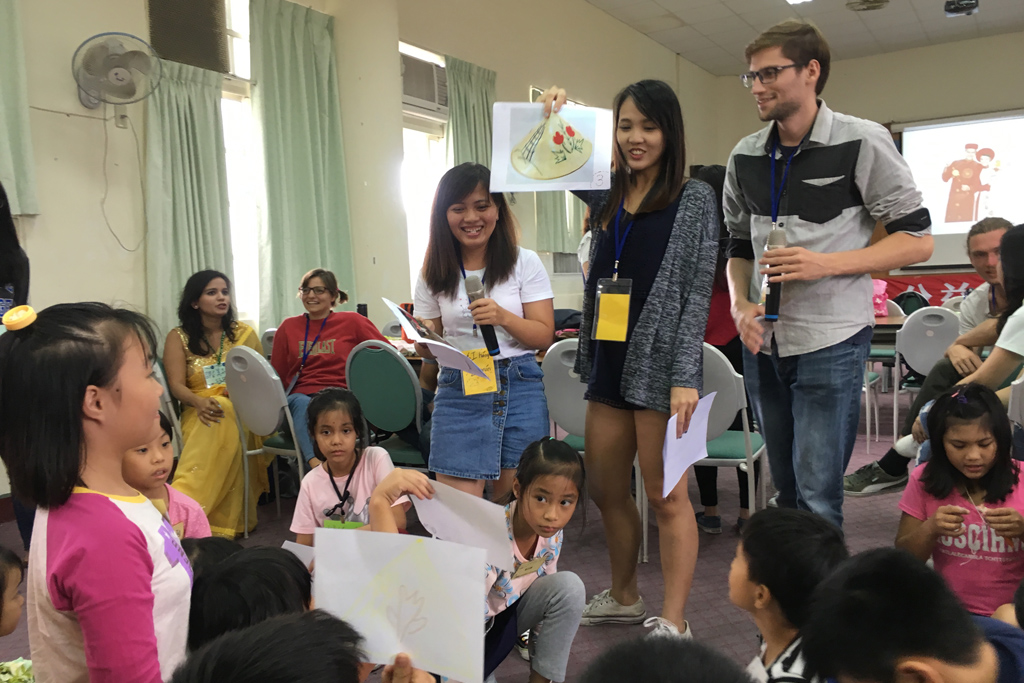
Six TCU language teachers and twenty international students took part in this event, and sixteen local youngsters joined them. In the program of “We are from different cultural backgrounds,” international students were divided to small groups based on their English comprehension, and each group was assigned a specific culture to share. The international students were from Honduras, Nicaragua, Italy, the United States, Sweden, Mongolia, Japan, Korea, India, Malaysia, Indonesia, Thailand, and Vietnam. Many of them didn’t speak Chinese well, yet they tried all sorts of ways to introduce their cultures, including using body language and making word cards.
Five international students had never learned Chinese before, and it had been only nine weeks since they started learning Chinese in Taiwan, yet they tried to make word cards and utilized their simple Chinese to teach Spanish. Another group of international students were from Indonesia, Thailand, Malaysia, Japan and Korea, and they taught students to say “How are you?” “Thank you!” “I am sorry!” and “Good bye” in their languages. They also sang Indonesian children’s songs, which had simple lyrics and relaxing melodies, with the youngsters.
Another group of students introduced Italian hand gestures. They used mime, a silent art that involved acting or communicating using only movements, to attract youngsters’ attention. They employed hand gestures in slow motion, asked youngsters to guess the meaning of their gestures, and youngsters reacted vigorously. Right after the session, the youngsters used hand gestures to communicate with each other.
International students of the Chinese advanced class shared Vietnamese culture. They used PPT to introduce Vietnamese traditional clothing, snacks and folk arts, and encouraged youngsters to describe these items using simple Vietnamese words. They also asked the youngsters to look at pictures and choose the right answers, and to match Vietnamese words with pictures. The international students employed body language, drawings and pictures to teach Vietnamese.
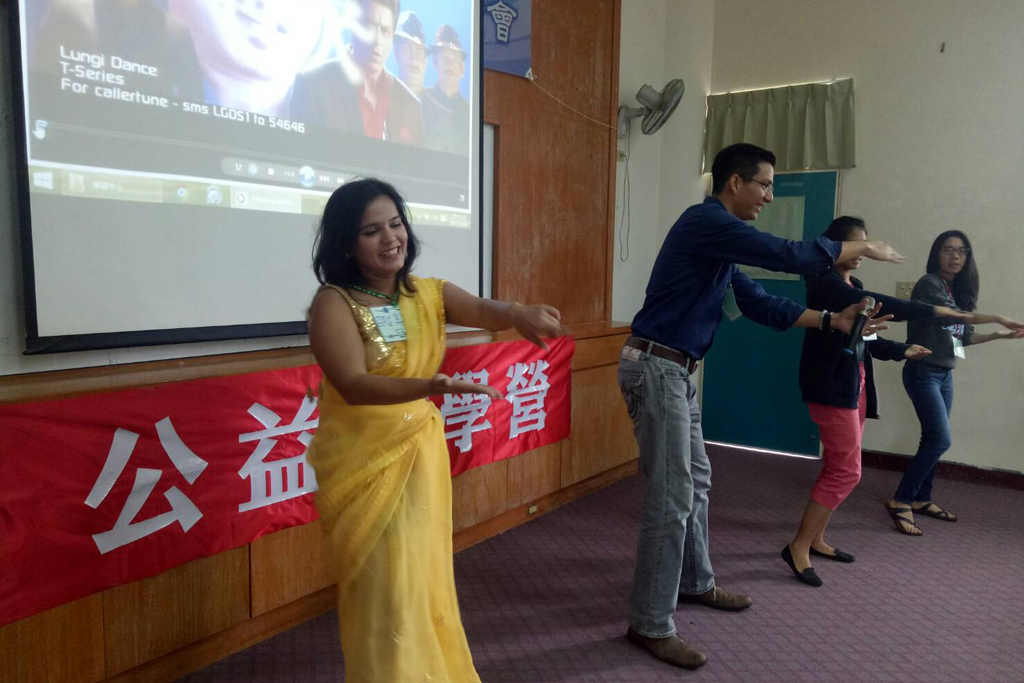
Students of the Chinese intermediate class became “Indian princes,” and “Indian princesses,” taught popular Indian dances and danced with the youngsters. Later they presented Diwali, which is the Hindu festival of lights celebrated every year in autumn in the northern hemisphere (spring in the southern hemisphere.) They also presented the uniqueness of Indian culture, such as the Bridal Nose Ring which is worn by a bride, and Bindi, which is a red dot worn in the center of the forehead.
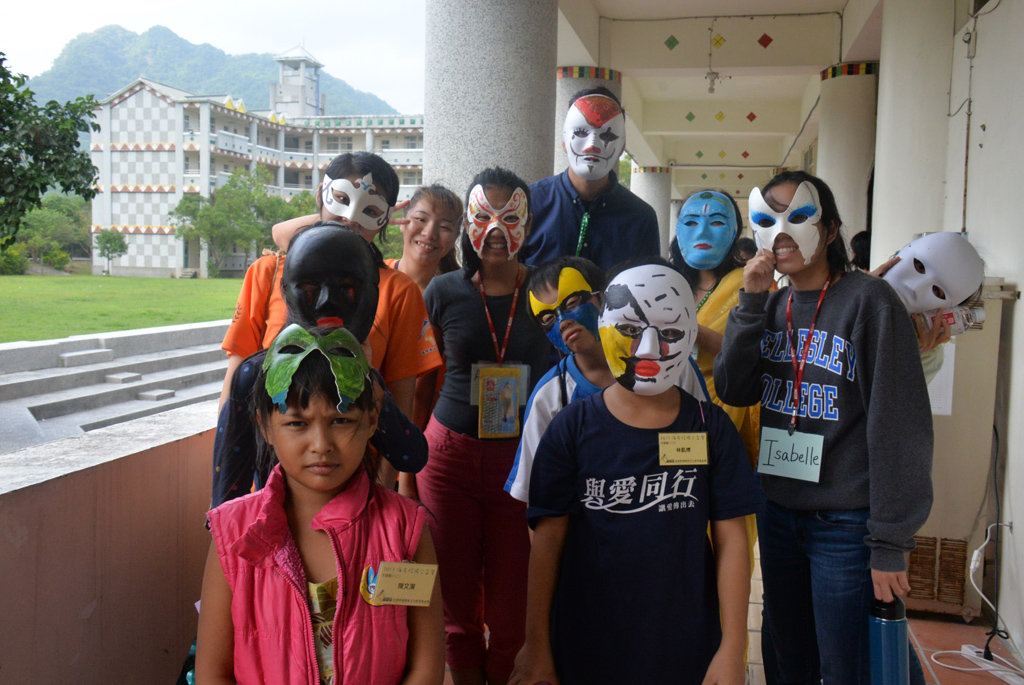
Halloween was coming, and the international students had prepared plain masks with flavors of their cultures, and painted those masks with the youngsters. The youngsters were talented, and showed their creativity in painting the masks.
The program of “Challenge for tribal communities” was exciting. Each group drew a card with an instruction on it, and group members had to perform what each card requested. One group was asked to invite trial elders for an interview, and at the beginning, youngsters were shy to invite their grandfathers and grandmothers to be interviewed. Yet, when the elders were asked, they accepted the invitation right away, and cooperated with interviewers fully. After the interview, the elders happily took a group photo with all participants.
The event ended with all attendees dancing together. A staff of TCU’s Chinese Language Center mentioned that the international students didn’t speak Chinese well, yet they were able to host various activities. Through good planning beforehand, and actual interaction with youngsters, these international students enhanced their Chinese speaking skills, by using different languages to talk to each other, and experienced different cultures.